“Elba is the island that makes Tuscany work as a cruising ground: eighteen miles across, a Medici harbour, sheltered bays on both coasts and berths at a fraction of Sardinian prices.”
In short. Elba is the largest island in the Tuscan Archipelago, about 18 miles across, 11 nautical miles from Piombino on the mainland and 37 from Giglio. It has marinas at Portoferraio, Porto Azzurro and Marciana Marina, none of them priced like the Costa Smeralda. A crewed week in Italy starts near €80,000.
It is bigger and more varied than most guests expect: a mountainous western half, a string of sheltered bays on the south coast, and a proper old harbour town at Portoferraio. Napoleon spent his exile here in 1814 and 1815 and both his residences are open.
A Tuscany week built around Elba and the smaller islands nearby gets you clear water and short hops within reach of Florence and the mainland, which is a combination nowhere else in Italy offers.
Must-dos on Elba
- Portoferraio, the Medici harbour ringed by fortifications
- Napoleon’s two houses, the Villa dei Mulini in town and the Villa San Martino inland
- The south-coast bays, Fetovaia, Cavoli and Sant’Andrea
- The cable car up Monte Capanne, with the archipelago below and Corsica on a clear day
- A run out to Capraia or Giglio, if the week has the days
On this page: Portoferraio · the Napoleon houses · the south coast · Monte Capanne and the west · the other Tuscan islands · where yachts tie up · what it costs · distances · when to go
Portoferraio and Porto Azzurro


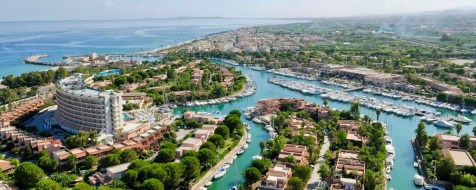
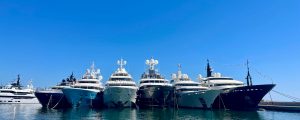
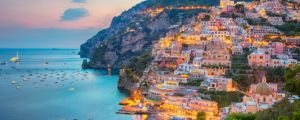
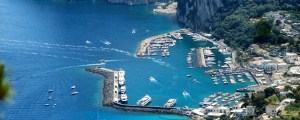
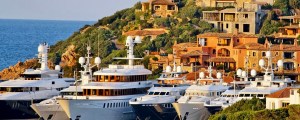
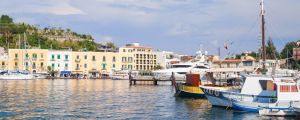
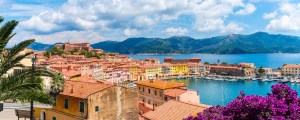
Portoferraio is the main town and the best arrival: a harbour the Medici built and fortified in the sixteenth century, with the old quarter climbing the hill behind the walls and the yacht berths inside. It takes the largest yachts on the island and it is the one to book first for August.
The town is a working Tuscan port rather than a resort, and it is the better evening on the island. Porto Azzurro on the east side is the second town, smaller and more relaxed, with a good marina of its own.
Napoleon’s two houses
Napoleon arrived in May 1814 and left in February 1815, and in those nine months he reorganised the island’s administration, its roads and its iron mines. Both his residences are open and both are genuinely interesting: the Villa dei Mulini in Portoferraio, between the two forts with a garden over the sea, and the Villa San Martino a few miles inland, which was the summer house.
It is the rare shore excursion that works for a mixed group, because it is half an hour of history rather than a day of it, and it is a short walk or a short drive from the berth.
The south coast bays
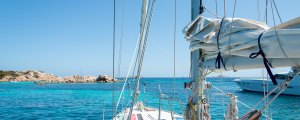
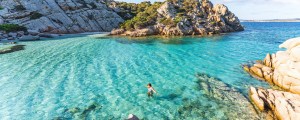
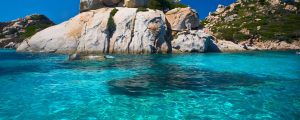
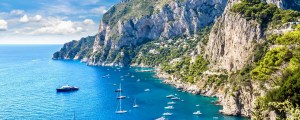
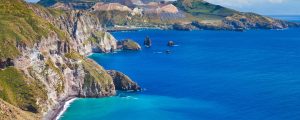
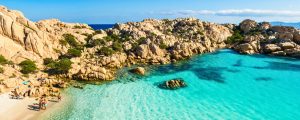
The south coast is where the swimming is. Fetovaia, Cavoli and Sant’Andrea are the three bays most captains work into a week, all with clear water over sand and granite, and all sheltered in the prevailing summer north-westerly.
That is the useful thing about Elba: the island is small enough that switching sides takes an hour. The south and south-west bays are the reliable ones in the summer breeze, and the north coast including Portoferraio’s outer roads works when the wind goes south. It is forgiving in changeable weather in a way the Ligurian coast is not.
Monte Capanne, Marciana Marina and the west
The western half is mountainous and the cable car up Monte Capanne, at 1,019 metres the high point of the archipelago, gives you the whole of it laid out below with Corsica visible on a clear day. It is an open basket lift rather than a cabin, which is either the charm or the problem depending on the guest.
Marciana Marina on the north-west coast is the third marina and the prettiest of the three. Elba also has a serious mining history, iron since Etruscan times, and the mineral museum at Rio Marina on the east coast is better than it sounds.
Capraia, Giglio and the rest of the archipelago
Elba is the centre of gravity but not the whole archipelago. Capraia, 30 miles north-west, is volcanic, almost undeveloped and the quietest island in the group. Giglio, 37 miles south-east, has a walled hilltop village and the clearest water in Tuscany. Pianosa and Montecristo are restricted: Pianosa is a former prison island with tightly limited access and Montecristo is a nature reserve requiring a permit well in advance.
A week that works Elba plus Capraia or Giglio is the strongest version of a Tuscan charter. Our guide to how long an Italy charter should be is the one to read if the days are tight.
Where yachts actually tie up on Elba
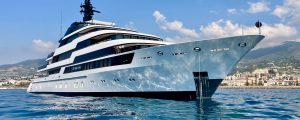
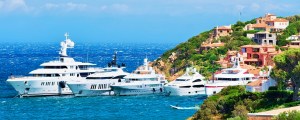
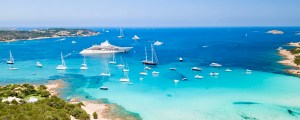
- Portoferraio takes the largest yachts on the island and is the one to book first for August.
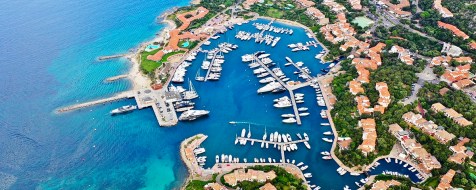
- Porto Azzurro and Marciana Marina are the other two marinas, smaller and more relaxed. None of it approaches Costa Smeralda pricing.
- At anchor on the south and south-west bays in the prevailing north-westerly, and on the north coast when the wind goes south. Switching sides takes about an hour.
The channel between Elba and the mainland at Piombino carries regular ferry traffic and deserves respect, particularly in poor visibility; the captain routes around the crossing lanes rather than through them. Our guide to marina and anchor nights in Italy has the wider picture.
What a week in Tuscany costs
A crewed week in Italy starts around €80,000 for a motor yacht, with most weeks between €150,000 and €300,000 and the top of the market at €300,000 to €500,000 and above. On top come an advance provisioning allowance of roughly 25 to 35 per cent, Italian VAT at 22 per cent and a gratuity of usually 5 to 15 per cent. See our Italy charter cost guide, APA and VAT.
Tuscany is the quiet value corner of Italian chartering. Elba is well served for berthing by Italian standards and none of it approaches Costa Smeralda pricing, so a week here costs noticeably less than the same yacht in Sardinia or on the Amalfi Coast.
Fitting Elba into the week
Elba is the centre of a Tuscan week, with Piombino the mainland link and Pisa or Florence the airports.
| From Portoferraio | Distance | At 12 knots |
| Piombino | 11 nm | 55 min |
| Porto Azzurro | 15 nm | 1 h 15 |
| Capraia | 30 nm | 2 h 30 |
| Giglio | 37 nm | 3 h 05 |
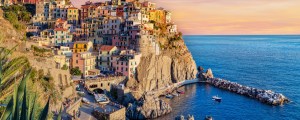
| Cinque Terre | 84 nm | 7 h |
Running north to the Ligurian coast is 84 nautical miles, a full day or an overnight, and it is the main decision in a week that wants both. See where to start an Italy charter.
When to go
- June and September are the best weeks: warm water, the island busy rather than full and the bays usable on both coasts.
- July and August bring Italian and German holidaymakers rather than international yacht traffic, and Portoferraio berths need booking.
- May and October are quiet and green, and Elba takes them better than most Italian islands because the walking and the history do not need high summer.
Our month-by-month view is in the best time for an Italy charter.
People also ask about Elba
Is Elba worth a yacht charter?
Yes, and it is the reason Tuscany works as a cruising ground at all. It is 18 miles across with sheltered bays on both coasts, three marinas, clear water, and Napoleon’s houses ashore, all within reach of Florence and the mainland.
Where do yachts berth on Elba?
Portoferraio takes the largest yachts and is the one to book first for August. Porto Azzurro on the east side and Marciana Marina on the north-west are the other two, smaller and more relaxed. None of it approaches Costa Smeralda pricing.
Where is the best swimming on Elba?
The south coast: Fetovaia, Cavoli and Sant’Andrea, all clear water over sand and granite and all sheltered in the prevailing summer north-westerly. The island is small enough to switch sides in about an hour when the wind goes south.
What else is in the Tuscan Archipelago?
Capraia, 30 miles north-west, volcanic and almost undeveloped. Giglio, 37 miles south-east, with a walled hilltop village and the clearest water in Tuscany. Pianosa and Montecristo are restricted, Montecristo requiring a permit well in advance.
How far is Elba from the mainland?
About 11 nautical miles from Piombino, under an hour. The channel carries regular ferry traffic and the captain routes around the crossing lanes rather than through them, particularly in poor visibility.
Can you visit Napoleon's houses on Elba?
Yes, both of them. The Villa dei Mulini sits in Portoferraio between the two forts with a garden over the sea, and the Villa San Martino is a few miles inland. He was here from May 1814 to February 1815 and reorganised the island while he waited.






 iMessage
 WhatsApp