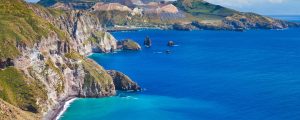
“The Aeolians are seven volcanic islands with two of them still alive: Stromboli erupting after dark, Panarea’s whitewashed bars, and a chain small enough to work in a week.”
In short. The Aeolian Islands lie 17 to 20 nautical miles off Sicily’s north coast, reached from Portorosa or Milazzo. Marina berthing is limited across the whole chain, so most nights are at anchor. A crewed week in Italy starts near €80,000.
This is the reason experienced charter clients choose Sicily over anywhere else in Italy. Two of the volcanoes are still active, Stromboli erupts visibly every twenty minutes or so all night, and watching it from the deck of your own yacht is the strongest thing this cruising ground has to offer. Nowhere else in the Mediterranean does that.
The islands are compact, the hops are short and the character changes completely from one to the next, which is what makes them the core of a Sicily week rather than a side trip. Our eight-day Sicily and Aeolian itinerary runs all seven, out of Portorosa.
Must-dos in the Aeolians
- Dinner at anchor off the Sciara del Fuoco, watching Stromboli erupt against a dark sky
- A night off Panarea, anchored by Basiluzzo or Lisca Bianca and tendering in
- Pane cunzato at Alfredo’s on Salina, on the waterfront at Santa Marina
- The warm-water dip at Vulcano, where the seabed bubbles
- The run out to Filicudi and Alicudi, if the week has the days for it
On this page: our own trip · Stromboli · Panarea · Salina and Lipari · Vulcano · Filicudi and Alicudi · where yachts tie up · what it costs · distances · when to go
From our own trip through the Aeolians


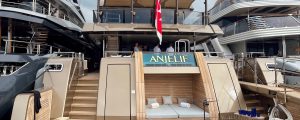
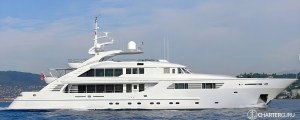
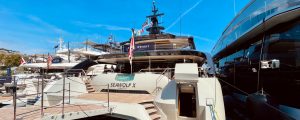
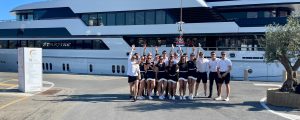
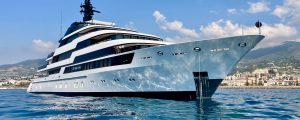
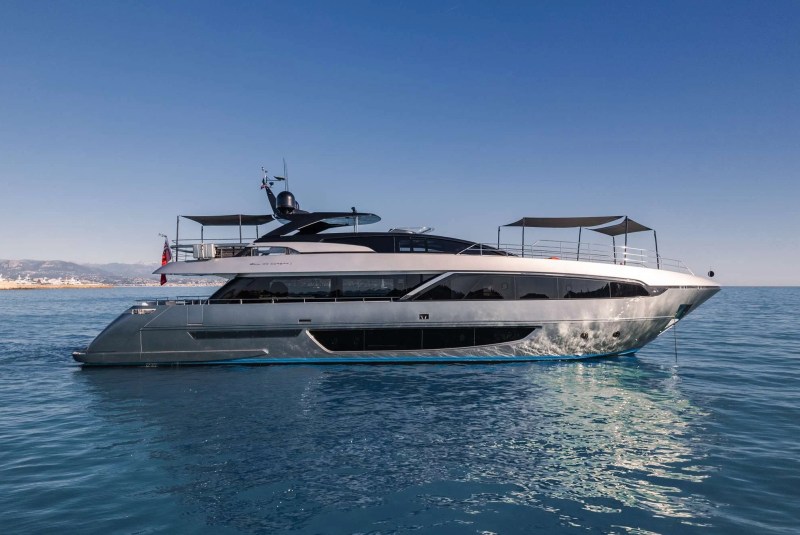
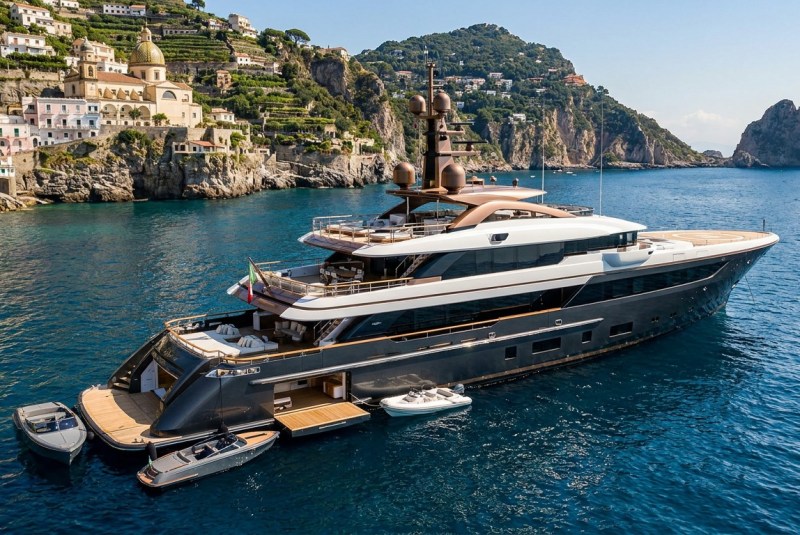
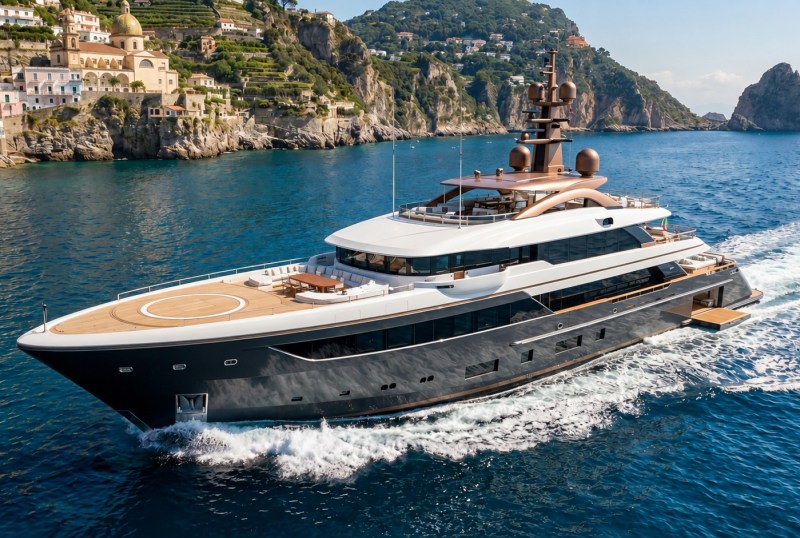
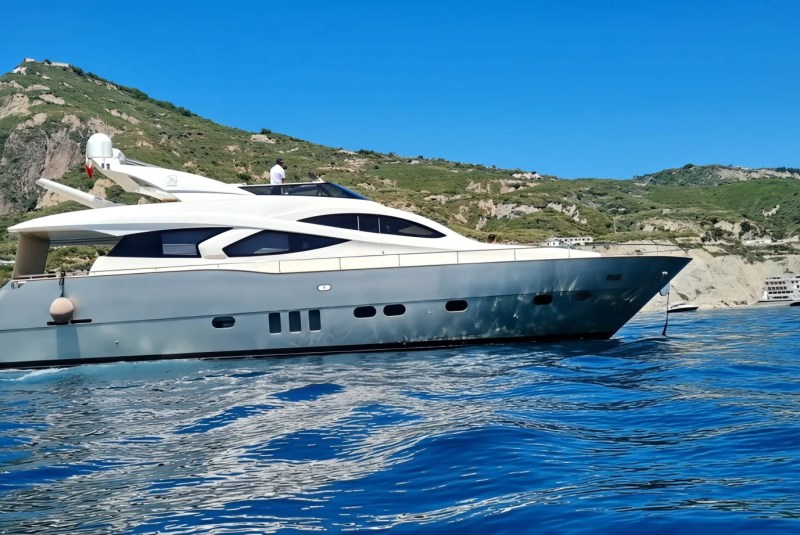
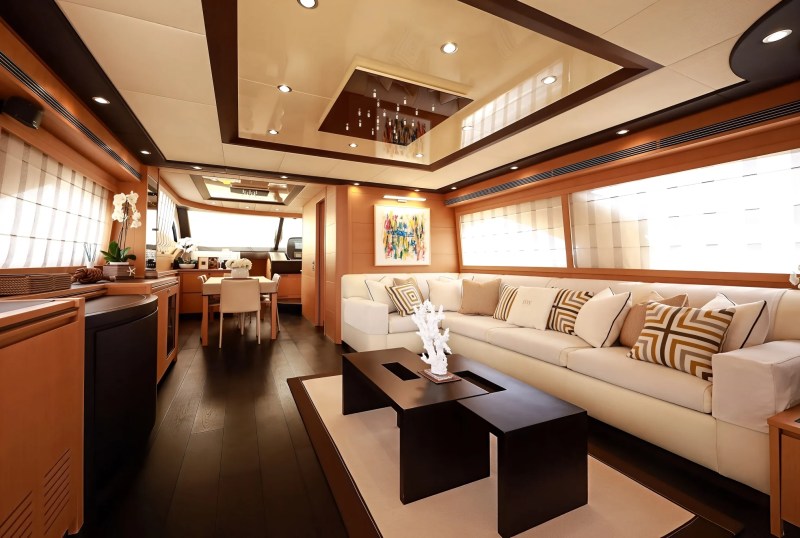
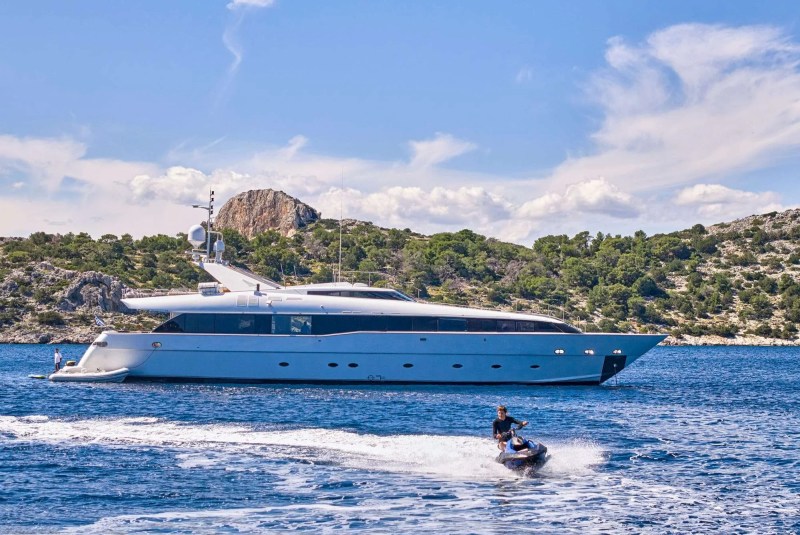
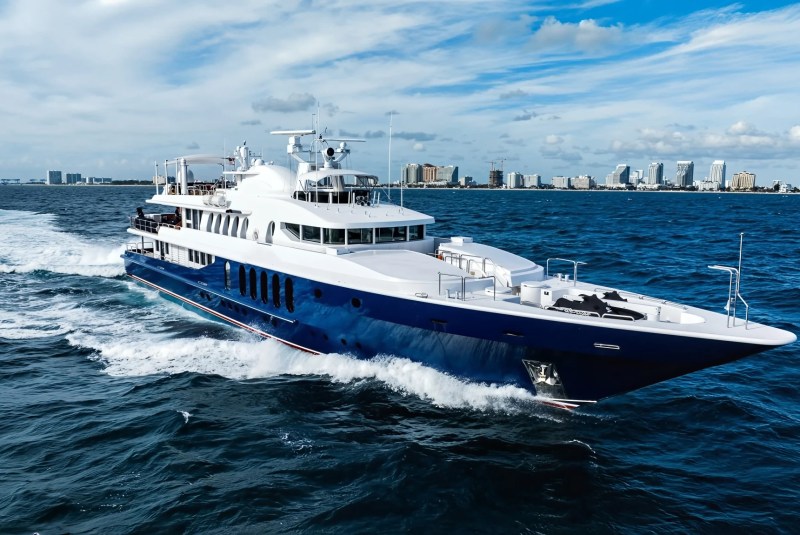
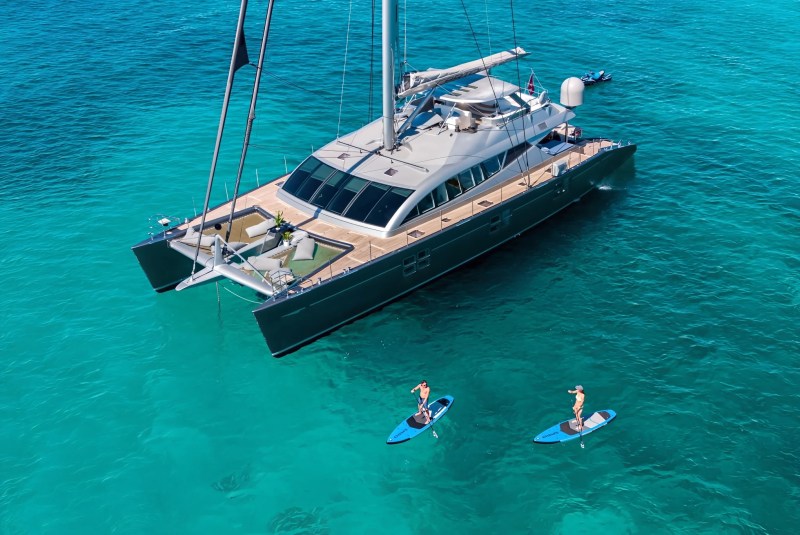
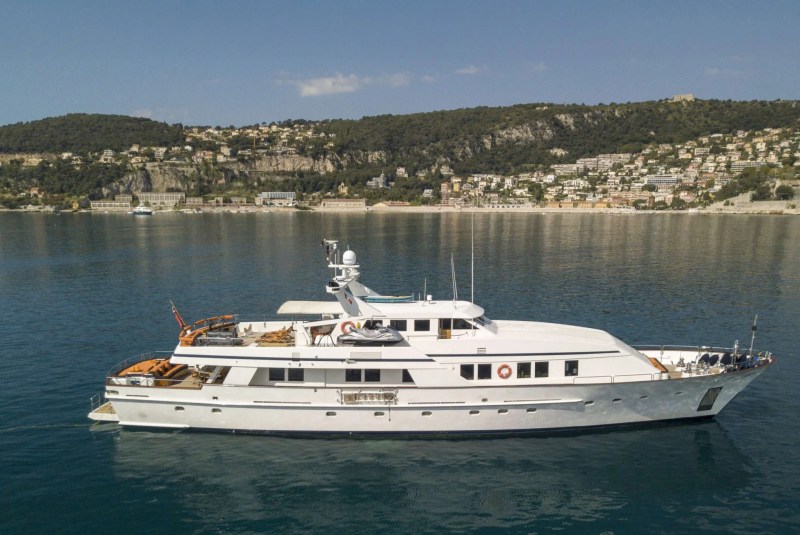
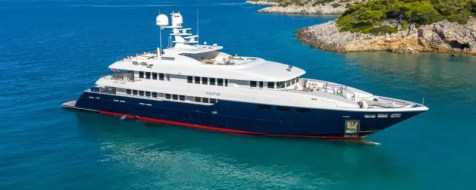
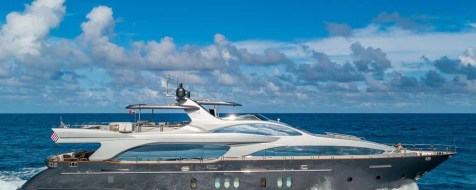
We do not recommend this route from armchair research. We sent our own charter team to run the loop by yacht, aboard the motor yacht OLGA, and built the plan around what actually works: the best nights, the best positioning and the right plan B when the wind or the restrictions change the day.
Three things came back from that trip and they are now in everything we write about the archipelago. The first is that the forecast dictates the route here more than the plan does. The second is that the food is better than anyone expects, and that a chef who shops on Salina and Lipari is worth more than a restaurant booking. The third is Stromboli after dark, which is the thing guests describe afterwards.
The honest caveat we also carry: the famous mud baths at Vulcano have had periods of closure because of gas emissions, so we plan that day to be worth doing anyway, with the crater walk, the thermal shoreline and the black sand.
Stromboli: the island that erupts all night

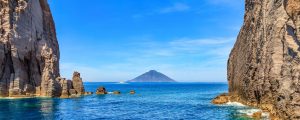
Stromboli is the headline, and it behaves like one. The cone rises 924 metres straight out of deep water and erupts every twenty minutes or so, visibly, all night.
The standard plan is to arrive late in the day, take dinner at anchor off the Sciara del Fuoco on the north-west side, and watch the eruptions against a dark sky. It is a drift-and-watch stop rather than a settled overnight, and the crew positions for the wind rather than for the view.
The full Stromboli page covers the anchorages, the night plan and the village at Ginostra.
Panarea: the small fashionable one

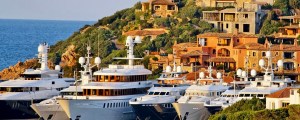
Panarea is the smallest of the seven and the most fashionable: a whitewashed village, a handful of very good bars and a summer crowd that arrives by boat rather than by ferry. It is the one evening of the week where people dress for dinner.
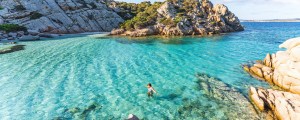
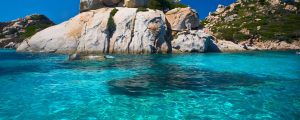
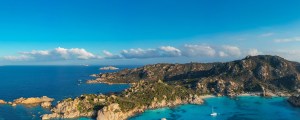
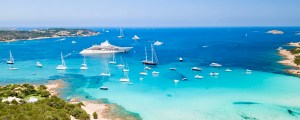
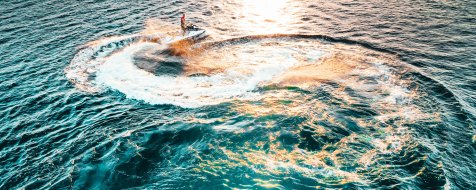
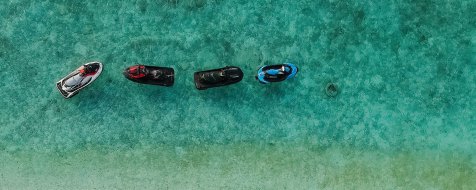
Yachts anchor off the islets of Basiluzzo or Lisca Bianca and tender in. The water round those rocks is the clearest in the archipelago and the obvious place to put the toys in before the evening. The Panarea page has the detail.
Salina and Lipari: the wine island and the hub


Salina is the green one and the wine island: two extinct cones, terraced vineyards, capers, and the best eating in the archipelago in Malfa and Santa Marina. Our own trip ate pane cunzato and granita at Alfredo’s on the Santa Marina waterfront, which is still what we send guests to.
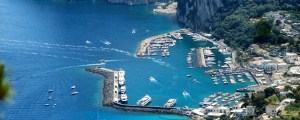
Lipari is the largest island and the practical hub. It has the only real provisioning in the chain, an archaeological museum that is better than it sounds, and the white pumice quarries on the north-east coast that make the water off that shore an improbable pale blue. If a berth is needed anywhere in the Aeolians, Lipari is where it is most likely to exist.
Vulcano: the crater and the warm shoreline


Vulcano is the closest island to Sicily and the most sulphurous: you smell it before you see it. The crater walk is about an hour up, the view from the rim takes in the whole chain, and the shoreline on the north side has water warmed from below where you can swim in it.
The famous mud baths have had periods of closure because of gas emissions, so our plan for the day does not depend on them. Porto di Levante and Porto di Ponente are the anchorages, and Vulcano and Lipari between them hold most of the chain’s limited berthing.
Filicudi and Alicudi: the far pair

Filicudi and Alicudi are the far western pair and the reason to take eight days rather than seven. Barely developed, with almost no cars on Filicudi and none at all on Alicudi, they are what the rest of the archipelago looked like fifty years ago.
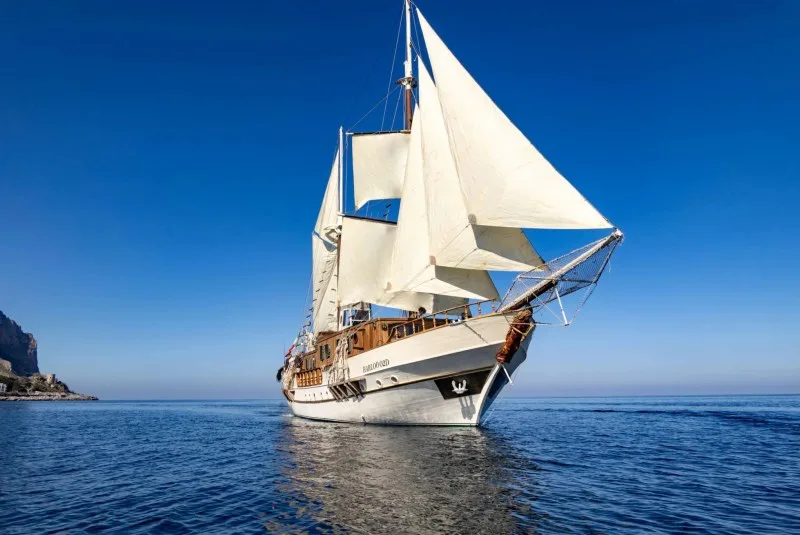
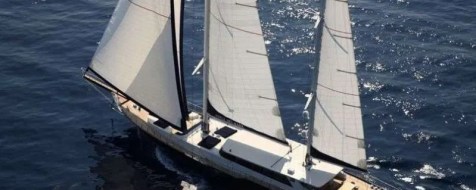
Filicudi is small-scale and we plan buoys or a carefully chosen anchorage depending on the forecast. Alicudi is exposed and deep, and we plan conservatively there. The run is 17 nautical miles from Salina to Filicudi and 10 more to Alicudi, a comfortable day on a motor yacht and most of one under sail.
Where yachts actually tie up in the Aeolians
These are volcanic islands, which means deep water very close to shore and steeply shelving bottoms. Many anchorages are deeper than guests expect and some need a line ashore.
- Berthing is limited across the whole chain. Lipari and Vulcano have the most capacity, Panarea and Stromboli have very little, and in August none of it is available at short notice.
- Plan on anchoring for most nights and treat any berth as a bonus. That is the opposite of an Amalfi week and it is worth saying before the boat is chosen.
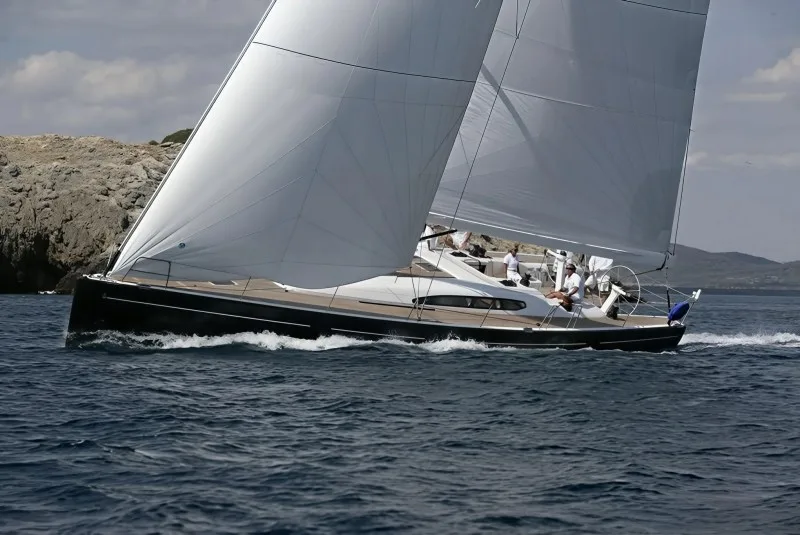
- The yacht matters more here. Boats without good ground tackle and an experienced captain have a harder time in the Aeolians than in Sardinia or on the Amalfi Coast.
The crossing from Sicily is 17 to 20 miles depending on the departure port: a comfortable morning run in settled weather and genuinely unpleasant in a strong northerly. The Tyrrhenian builds quickly here. Our guide to marina and anchor nights in Italy covers how crews plan around it.
What a week in the Aeolians costs
A crewed week in Italy starts around €80,000 for a motor yacht, with most weeks between €150,000 and €300,000 and the top of the market at €300,000 to €500,000 and above. On top come an advance provisioning allowance of roughly 25 to 35 per cent, Italian VAT at 22 per cent and a gratuity of usually 5 to 15 per cent. See our Italy charter cost guide, APA and VAT.
Sicily is better value than Sardinia at the same calibre of yacht, which matters at this end of the market. It is also cheaper to run: almost every night is at anchor rather than in a marina, and the archipelago has no berth priced like Porto Cervo or Capri in August.
Fitting the Aeolians into the week
The Aeolians are a week, not a stop. Most charters board at Portorosa or Milazzo on Sicily’s north coast, both within an hour of Catania or Palermo airports.
| Leg | Distance | At 12 knots | At 7 knots |
| Portorosa to Vulcano | 17 nm | 1 h 25 | 2 h 30 |
| Vulcano to Lipari | 3 nm | 20 min | 30 min |
| Lipari to Salina | 10 nm | 50 min | 1 h 25 |
| Salina to Panarea | 11 nm | 55 min | 1 h 35 |
| Panarea to Stromboli | 12 nm | 1 h | 1 h 45 |
| Salina to Filicudi | 17 nm | 1 h 25 | 2 h 25 |
| Filicudi to Alicudi | 10 nm | 50 min | 1 h 25 |
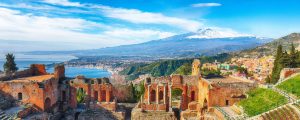
Rounding Sicily’s north-east corner to Taormina past Messina is a real passage rather than a hop and needs a settled day. Palermo to the islands is roughly 100 miles, a full day or an overnight. See where to start an Italy charter and how long the week should be.
When to go
- September and early October are the best weeks here, and our own best-time guide singles Sicily and the Aeolians out as especially strong from September onward.
- June and July are settled and warm, with the archipelago still quiet by Amalfi standards.
- August fills with Italian boats and no berth is available at short notice. The anchorages still work.
- Any month, the forecast decides the route. A strong northerly makes the crossing and several anchorages untenable.
If quiet is the brief, our guide to Italy without the crowds puts the Aeolians near the top for exactly that reason.
People also ask about the Aeolian Islands
Can you see Stromboli erupting from a yacht?
Yes, and it is the reason to come. Stromboli erupts every twenty minutes or so, visibly, all night. The plan is to arrive late in the day and take dinner at anchor off the Sciara del Fuoco on the north-west side, with the crew positioning for the wind.
How many days do you need for the Aeolian Islands?
Seven covers five islands comfortably. Eight lets you add Filicudi and Alicudi, which is the version we publish, because the far pair are the quietest and the run out to them is 17 and 10 nautical miles.
Where do yachts berth in the Aeolian Islands?
Mostly nowhere: berthing is limited across the whole chain. Lipari and Vulcano have the most capacity, Panarea and Stromboli very little, and in August none is available at short notice. Plan on anchoring most nights and treat a berth as a bonus.
Which is the best Aeolian island?
They answer different briefs. Stromboli for the eruptions, Panarea for the evening and the clear water, Salina for the food and the wine, Lipari for provisioning and a town, Vulcano for the crater and the warm shoreline, Filicudi and Alicudi for emptiness.
Are the Aeolians difficult for a yacht?
More demanding than Sardinia or the Amalfi Coast. The water is deep close to shore, some anchorages need a line ashore, and the Tyrrhenian builds quickly, so the forecast dictates the route. A yacht with good ground tackle and an experienced captain makes the difference.
How far are the Aeolian Islands from Sicily?
About 17 to 20 nautical miles from Portorosa or Milazzo on the north coast, an hour and a half at 12 knots. Both bases are within an hour of Catania or Palermo airports.






 iMessage
 WhatsApp