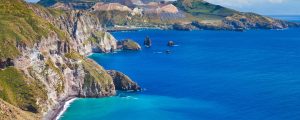
“La Maddalena is the water people mean when they say Sardinia looks Caribbean: sixty granite islands inside a national park, white sand, and a permit system your captain has to have solved weeks ago.”
In short. The La Maddalena archipelago is about 60 granite islands off the north-east tip of Sardinia, all of it a national park. Access is charged per yacht per day on a scale that rises with length, some zones are buoy-only and the most protected are closed to anchoring. It is 7 nautical miles from Porto Cervo. A crewed week in Italy starts near €80,000.
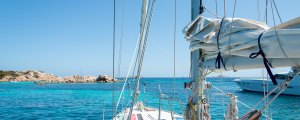
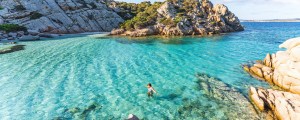
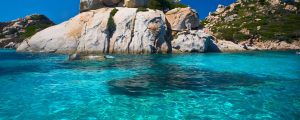
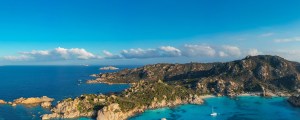
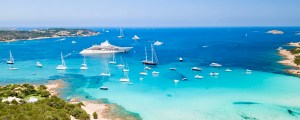
This is the half of a Sardinian week guests remember: shallow turquoise over pale granite, sand you can read from the flybridge, and anchorages that are empty by local standards. It pairs with the Costa Smeralda an hour or two south, which is where the dinners and the berths are.
The catch is that it is actively managed, and well managed. The rules change between seasons, the zoning is enforced, and the difference between a good day here and a frustrating one is whether the permits were bought and the bays chosen in advance.
Must-dos in the archipelago
- Cala Corsara on Spargi, the lunch anchorage most captains rate highest in the park
- The Spiaggia Rosa on Budelli, seen from the water because landing has been closed for years
- The Porto della Madonna, the shallow channel between Budelli, Razzoli and Santa Maria
- Cala Coticcio on Caprera, worth the detour round the east coast
- Garibaldi’s house on Caprera, the half day off the boat when guests want something other than a beach
On this page: the park rules · Spargi and Santa Maria · Budelli and the pink beach · Caprera and La Maddalena town · where yachts tie up · what it costs · distances · when to go
The park rules, the permits and the buoys


This is genuinely the part of a Sardinian charter where the crew earns its money.
The whole archipelago is a national park and it is actively managed. Access is charged per yacht per day on a scale that rises steeply with length, some zones are buoy-only, and the most protected areas are closed to anchoring altogether. The rules also change between seasons.
One of the captains we filmed put the working version of it plainly: they stay on the buoys in the La Maddalena area, there are good ones, and the call was made weeks ago with the permits bought and the bays chosen. That is the difference between a smooth day and a wasted one.
Holding is excellent in the sand patches and poor on the weed, so anchoring here rewards a slow approach and clear water. Italy protects its Posidonia meadows and a captain who refuses a bay that looks perfect from the rail is doing the job properly.
Spargi, Santa Maria and Razzoli
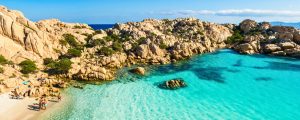
Spargi is the one to plan the day around. Cala Corsara on its south side is the anchorage most captains rate highest in the whole park for a lunch stop: shallow, sandy, sheltered from the north, and the water is the colour the brochures promise.
Santa Maria and the channel between it and Razzoli give you more of the same with fewer boats, which matters in August. The mistral is the wind that decides between them. When it blows, the south-facing bays on Spargi and Santa Maria are where the fleet goes, and the north-facing ones empty out.
Budelli and the Spiaggia Rosa

Budelli is the famous one, for the Spiaggia Rosa, the pink beach coloured by crushed coral and shell. The beach has been closed to landing for years to let it recover, so this is a look-from-the-water stop rather than a swim ashore, and guests should know that before the day starts rather than after.
What you can do is anchor or pick up a buoy in the Porto della Madonna, the shallow lagoon enclosed by Budelli, Razzoli and Santa Maria, which is one of the most photographed pieces of water in Sardinia and deservedly so. Depths are small and the bottom is visible throughout, which is exactly why the zoning here is strict.
Caprera, Cala Coticcio and La Maddalena town


Caprera is the second-largest island in the archipelago and the greenest, joined to La Maddalena town by a causeway. Garibaldi spent his last years here and his house is now a museum, which makes a good half day off the boat when guests want something other than another beach.
Cala Coticcio on its east coast, sometimes called Tahiti, is worth the detour: a double cove of white sand between granite, with numbers limited ashore in season.
La Maddalena town itself, on the main island, is the practical corner: the only real provisioning in the archipelago, a ferry link to Palau on the mainland, and berthing of a sort. It is a working town rather than a destination, which after three days of empty bays is sometimes exactly what a crew needs.
Where yachts actually tie up in the archipelago
- Buoys where buoys exist. Several zones are buoy-only and the moorings are good; they are booked, not found.
- At anchor in the sand patches elsewhere, with a slow approach and clear water. Holding is excellent on sand and poor on weed.
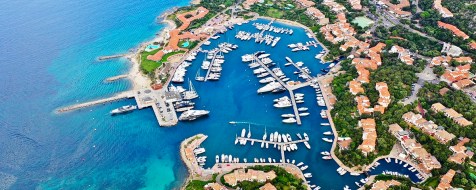
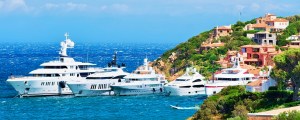
- La Maddalena town and Palau for a berth, provisioning or a crew change. For anything larger, Porto Cervo is 7 miles south.
Park access is charged per yacht per day on a rising scale by length, bought in advance. Our guide to marina and anchor nights in Italy covers the wider balance; in this archipelago almost every night is on the hook or a buoy, and that is the appeal.
What a week in the archipelago costs
A crewed week in Italy starts around €80,000 for a motor yacht, with most weeks between €150,000 and €300,000 and the top of the market at €300,000 to €500,000 and above. On top come an advance provisioning allowance of roughly 25 to 35 per cent, Italian VAT at 22 per cent and a gratuity of usually 5 to 15 per cent. See our Italy charter cost guide, APA and VAT.
The archipelago adds the park fee, which is per yacht per day and scales with length, and almost nothing else. There are no berths to buy and no beach clubs to book. A week that spends more days here and fewer on the Costa Smeralda is materially cheaper for the same yacht.
Fitting the archipelago into the week
The archipelago is the northern half of a Sardinian week, and everything inside it is close.
| From La Maddalena town | Distance | At 12 knots |
| Spargi | 4 nm | 20 min |
| Budelli | 5 nm | 25 min |
| Porto Cervo | 8 nm | 40 min |
| Cala di Volpe | 10 nm | 50 min |
| Bonifacio, Corsica | 15 nm | 1 h 15 |
| Olbia | 18 nm | 1 h 30 |
Our eight-day Sardinia and Corsica itinerary from Olbia works the Costa Smeralda first, crosses to Bonifacio and Porto Vecchio, then comes back down through Santa Maria and the archipelago. See also how long the week should be.
When to go
- June and September are the best weeks: warm water, the park quieter and the mistral less frequent than in spring.
- July and August are busy by local standards, which still means emptier than anywhere on the Amalfi Coast. Buoys and permits need more lead time.
- May and October are beautiful and more exposed to the mistral, which can shut the north-facing bays for days.
Our guide to Italy without the crowds puts northern Sardinia first for privacy with luxury, and the month-by-month view is in the best time for an Italy charter.
People also ask about La Maddalena
Do you need a permit for the La Maddalena archipelago?
Yes. The whole archipelago is a national park and access is charged per yacht per day on a scale that rises steeply with length. Some zones are buoy-only and the most protected are closed to anchoring. The rules change between seasons, so the crew buys the permits and plans the bays in advance.
Can you land on the pink beach at Budelli?
No. The Spiaggia Rosa has been closed to landing for years to let it recover, so it is a look-from-the-water stop. The Porto della Madonna, the shallow lagoon between Budelli, Razzoli and Santa Maria, is where yachts actually lie.
Where is the best anchorage in La Maddalena?
Cala Corsara on the south side of Spargi is the one most captains rate highest for a lunch stop: shallow, sandy and sheltered from the north. Santa Maria and the Razzoli channel give you similar water with fewer boats.
How far is La Maddalena from Porto Cervo?
About 8 nautical miles, 40 minutes at 12 knots, which is why a Sardinian week pairs the two: the Costa Smeralda for the berths and the dinners, the archipelago for the swimming.
Is the La Maddalena archipelago crowded?
Busy in August by local standards and still emptier than almost anywhere in Italy. Our guide to Italy without the crowds puts northern Sardinia first for privacy with luxury, precisely because of this water.
What is the wind like in the archipelago?
The mistral is the one that matters. When it blows, the south-facing bays on Spargi and Santa Maria are the shelter and the north-facing ones become untenable. It is more frequent in spring and autumn than in high summer.






 iMessage
 WhatsApp